In the nation’s service
In the service of all nations
In the service of humanity*
In the The Year of Magical Thinking, Joan Didion wrote about the passing of her husband, John Gregory Dunne ’54. Both writers, her sentences are charged with grief and with their shared wordsmithery. I have several scenes etched permanently in my memory: one in which he complimented her on a sentence, and one in which she found a computer file of his ideas for the future. The phrase “concept of service” was written next to the name of someone he admired who left his desk job to teach in Southeast Asia. A road Dunne never took. His last update to this file was the afternoon of the day he died. I cannot explain how deeply these two vignettes affected me.
When I read Magical Thinking for the first time, G was little, and my life was filled to brimming with her needs. I looked to Joan and John as examples of a dream life, not a little bit envyingly, while in the magical thinking trenches of a raising a child. I have said before that G’s childhood created an opportunity for me to re-parent myself. As she grew, parallel self-work shared our space, and I fell deeper into writing, poetry and reading, along with weekly therapy. Through EMDR (eye movement desensitization and reprocessing), I took scenes from my childhood, reprocessed them one at a time and held tenderness for each. By the time I emerged from this period, I brought scenes from the dissolution of our marriage into therapy, and held tenderness for them, too. These efforts created the foundation for my true adulthood. I always have been a late bloomer.
I would say my bona fide adulthood started when I turned forty. A home of my own. A rescue puppy. My first restoration project. A schedule that aligned with G’s school across the street. The early part of this chapter included my first experience with disciplined writing: four days a week at my desk from 9-3 with breaks for chocolate, tea and lunch. A walk with the dog at 3 which concluded with picking up G and walking home together. Fridays I cleaned house or removed wall-paper, primed, painted, re-floored, redid some electrical, or manifested other small changes. And repeat. My heart healed from the inside out and the outside in, through revisiting the words I had written over the previous ten years, and through seeing visible change in the walls and rooms of my still-favorite home we used to call the happy house.
All good things must come to an end, my mother used to say.
Our next chapter—about six years ago—took us to a new town and with it, a new foray in therapy. When the teenage years wobbled our house of cards, I learned about Richard Schwartz’s Internal Family Systems. IFS teases out the various sub-personalities or parts within each of us, creating a stage for each to speak to one another, building trust with the parts that are defending, managing or protected. Tellingly, Schwartz’s most recent book is No Bad Parts, which is the point in a nutshell. I did not spend anywhere near as much time on IFS as I did EMDR, but IFS created an opening that remains significant. If I can keep a bit of clarity in a painful moment and get curious about what is arising, opportunity comes forth for self-compassion, which is the cornerstone of my current personal work.
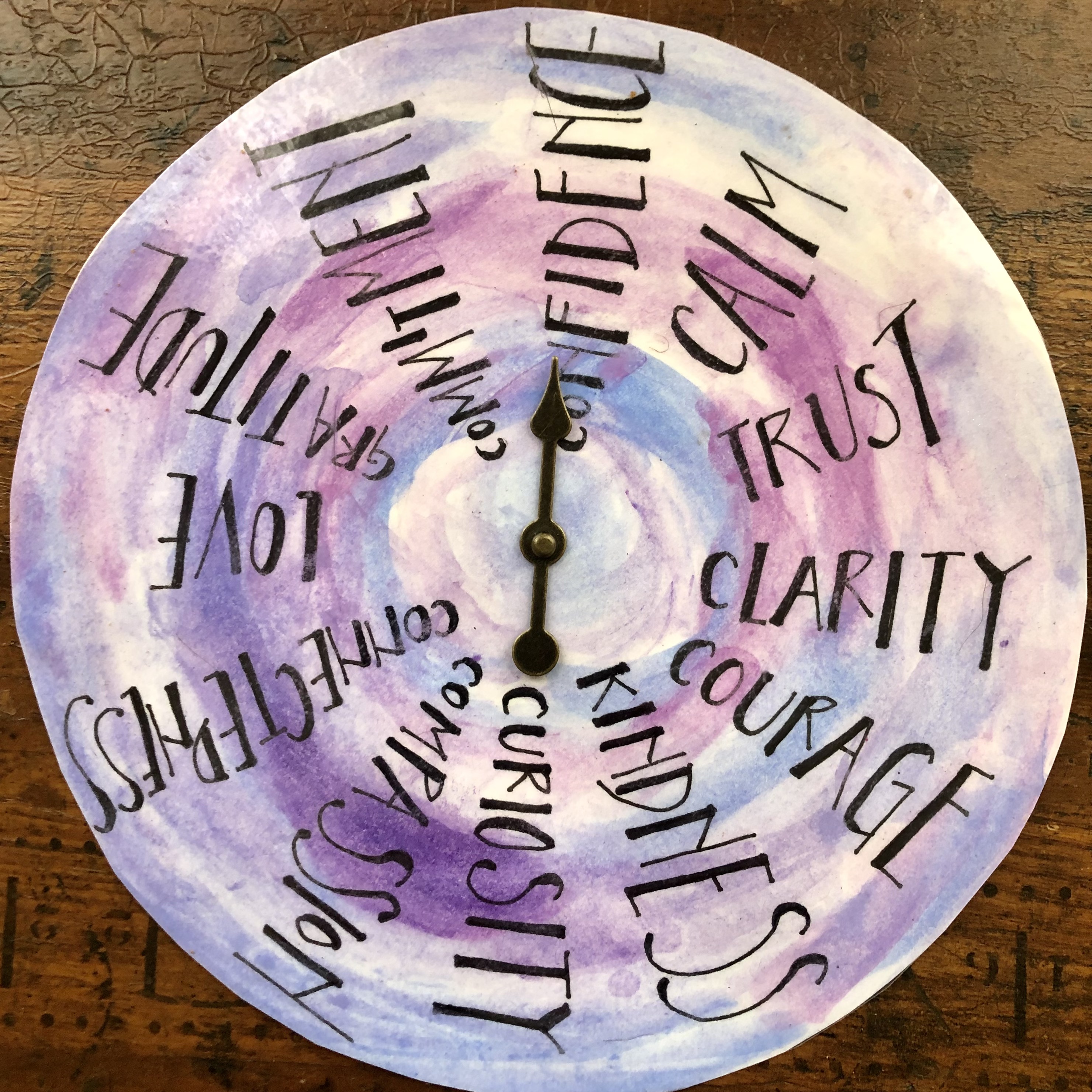
IFS holds that our core Self is the invisible “absence of parts.” Elements of Self include: calm, confidence, commitment, gratitude, love, trust, connectedness, compassion, curiosity, kindness, courage and clarity. To make myself focus a bit on this core, I made a little game I play each day (see below).
Living in a new place, among new people. Living through the isolation of Covid. Having a life in boxes for several years. All of it provokes regular discomfort. In different ways, all of my parts got disrupted. Parts I know well and parts I don’t. Parts who hang out toward the forefront of my consciousness and parts that lurk in the shadows.
During the past year, I spent more time in glorious aloneness than I have since my only-childhood. This time I am safe, and I can be whoever I want to be. I can embrace whatever I want to embrace. Eat what I want. Watch what I want. Time my day the way I want. Obviously there are tons of things over which I have no choice or control, but I never have had this much liberty within me to speak to myself (as silly as that may sound), to hear myself and respond with kindness.
*
And yet. There are outlier parts that are hard work, whose company I eschew. An example is a part of me that showed up strongest in high school. She is the one who felt something deep in Dunne’s fragmentary words, “the concept of service.” She is the one who applied to college with a story that she wanted to be in the nation’s service, and she meant it. Years of early travel, study in language and culture, leadership in student government, participating in Youth in Government and Model UN—these elements were how I defined myself. Every college I considered needed to have an international relations program and a pathway for me to law and domestic or foreign service. My sincerity was real. It hurts just to think about it.
But there was much I didn’t know. So much of me yet to be excavated.
Long before high school, I sought something closer to my essential self: access to wisdom and meaning, to love, connection and purpose. In high school, I thought it could be found representing my country. I felt this so strongly that as I grew farther and farther away from doing anything like it, I literally stopped going back to my high school gatherings. I couldn’t stand being in the place where I once held such a strong personal mission, which I never honored.
Oddly enough I easily could stand in the place of my university self, a sub-personality that emerged once I got to college. Previously I was someone who never felt invited to life’s party, who lived on the outskirts of everyone else, tacitly welcomed but not invited. My university self actually received invitations. Yet in accepting her, by the time I graduated, my life became increasingly defined by other people’s lives. The current in that direction was strong.
When I stepped into real adulthood, some parts of me were healthier than they ever had been, and some were on their way, while new creative and mystical parts I now adore were nascent. But the piece born of a passion for our country was silent.
When we moved to Ohio I didn’t perceive any relationship to this silence aside from what felt like a separate curiosity around what was happening to our beloved country. How could we be more divided than ever? Sure, there always were big opinions that divided us, but never in my lifetime have we lost friends, distanced family members and sustained hate over issues like this. And how did the concept of truth become so malleable?
Where did the united in these states go?
Over the past eighteen months, I have developed an abiding affection for a community that by and large holds distinctly different views from most of the people in my life. I do not write directly to this difference, but I report what I see, what I feel, and what we are doing on the ground to try to support one of many, many areas in this country abandoned by the prevailing winds of industry and globalization. Left to fend for itself, funds flow into other areas, places where people often vote differently and hold correspondingly different opinions. I believe that what we see here is what is happening in much of this land, and if we want our “united” back, we have to know where, how and why the divisions exist in the first place. Then we need to get to work to help one another. While it serves politicians to populate this division, I believe it does not serve our people or our country as a whole.
And so as I work here on restoring our buildings and volunteering for our local foundation, I pay attention. I talk, I listen, I write.
Sometimes I find it hard going. Each day I have no idea if I am on the right track for myself, for G or for anyone. Some days I count the hours until sundown.
*
It has been a while since my last independent break, often an overnight to recharge my light.
A week ago, a college friend messaged me, “this may be a little far out for you, but wanted to get this on your radar. I’m traveling to DC next week. Our classmate was recently confirmed by the Senate as US Ambassador to Vietnam. I’m hosting a small send-off…”
I stopped reading and promptly called the puppy-hotel. Then I started protecting my health like a maniac. Soon it was Friday.
Leaving a bit before 5AM, I dodged all of the Pittsburgh traffic and made it into DC a few minutes shy of five hours later with two speedy pit-stops. Like all of my recent adventures, I had a basic plan, a few pins, and the magnificent freedom to decide from there, which comes from flying solo.
One of the pins was the Holocaust Museum, but I had been unable to secure tickets ahead of time, so I timed a pit-stop at 7AM for the online opening for day-of tickets. I booked a time I could make safely, regardless of traffic, which also would give me enough time both at the museum and to get to the hotel for two conference calls mid-afternoon.
Driving the Pennsylvania pike eastbound, I began to think about my distant relationship with our nation’s capital. Once a place I imagined working, a place where my high school self walked the Russell Building halls and met her senators. A place where my college self visited friends and drank beer. A place where…
I was once little.
Looking at pandas.
With my dad.
The moment that penny dropped, I changed my GPS course and went directly to the National Zoo. Paid the entrance fee. Parked. And took a brisk walk, first to the elephants.
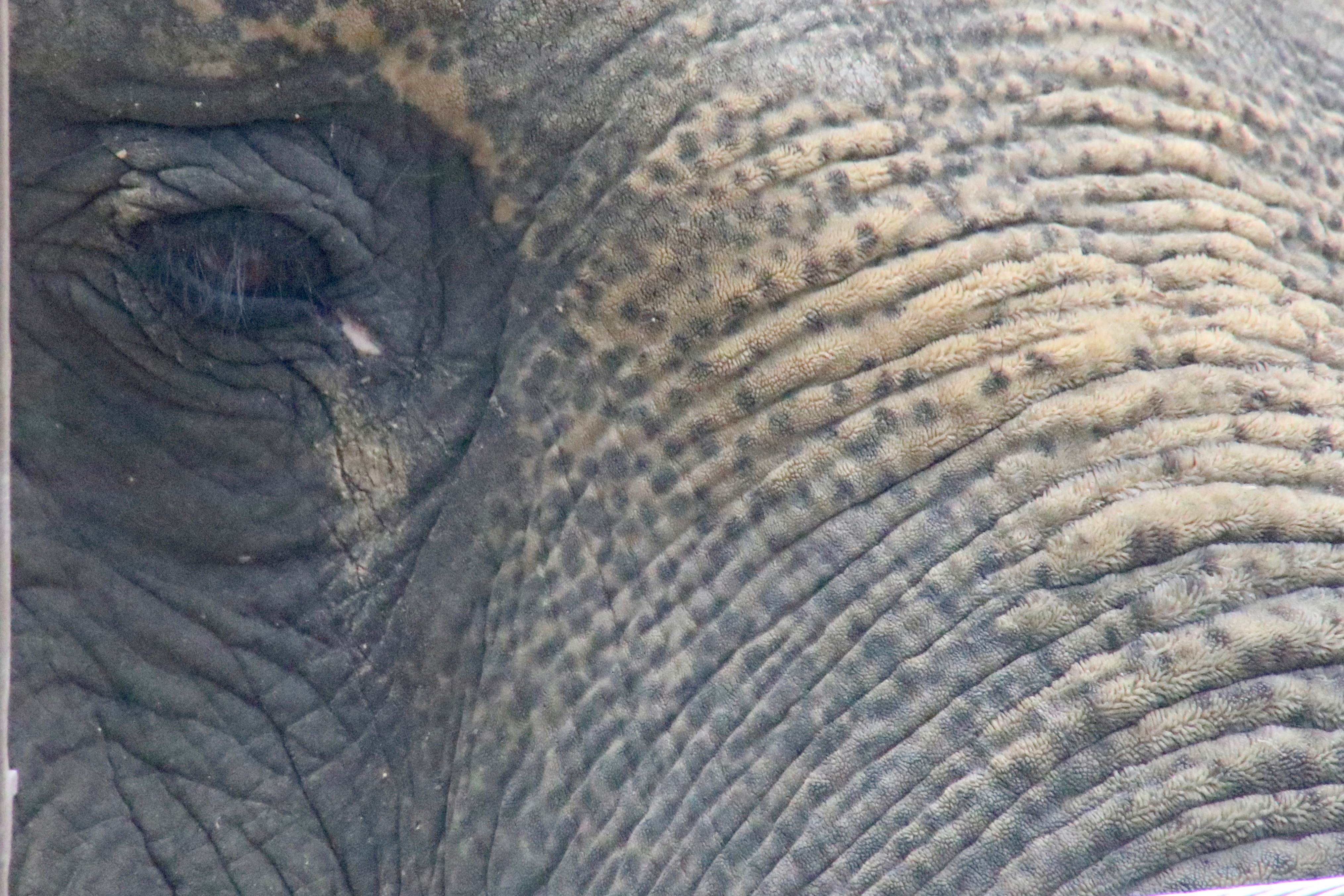
I had not thought about the zoo in years. The last time I went to any zoo, G was about the same age I was at the National Zoo with my dad—probably about four years old. Generally, I am not a huge fan, but there I was, masked due to the pandemic now with another variant, Ohio dust on my shoulders but wearing my city winter coat and carrying my camera. I climbed up part of the fence to get closer to eye level, extended my lens and looked straight into the eye of an elephant—queen of wild matriarchs. Ten plus feet tall, eight thousand plus pounds. Something in my heart pulled toward her essence, her sheer grandeur, with wonder that we could be this close, for a moment. Neither of us at home, but both of us alive. I wanted to say something to her. The best I could do was to send a blessing from my tugging heart to hers.
I walked on. Visitors were sparse yet I heard many languages.
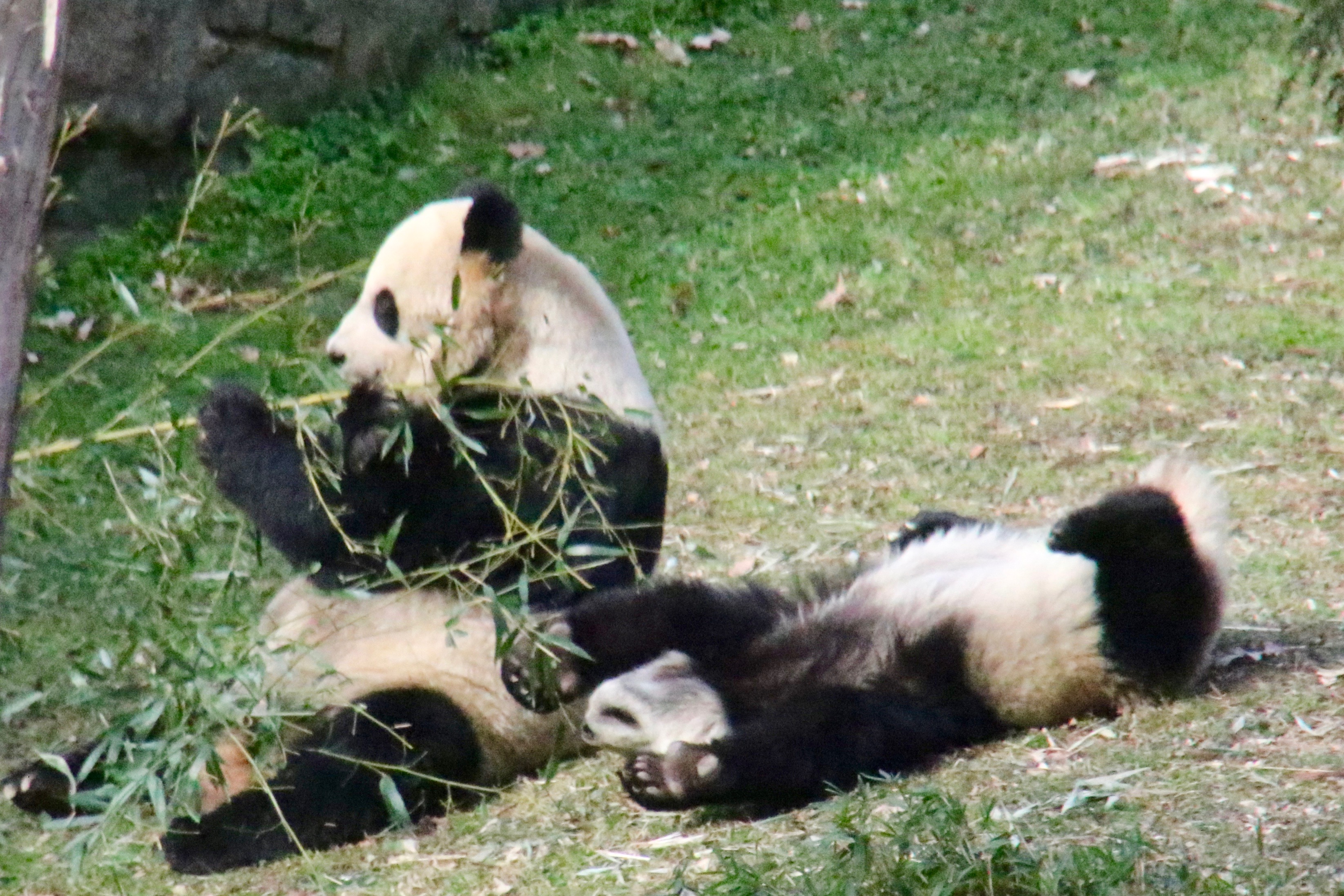
Most of the people stood near the pandas’ home, but I couldn’t see one right away. I wandered further, saw one indoors, and went back outside. Then I heard a gasp of voices, children obviously, but adults too, cracked open in delight. Myself included. We watched two pandas play, eat bamboo, do somersaults, nibble some more. I said to the woman standing next to me: we are all desperately hungry for this, aren’t we? She smiled. Just two pandas, playing.
Feeling vastly lighter, I returned to the car and headed toward my next stop. I asked for protective light to fill me as I faced what I knew I wanted to see, but I knew would be hard: the four-story building, just off the mall, dedicated to the holocaust and its current exhibit, Americans and the Holocaust, the “motives, pressures and fears that shaped America’s response.”
Upon arrival there was a security scan, and my handbag was called out. Do you have pepper spray in here? I didn’t think I did, but I have one zipper pocket I rarely check. It turns out I did have a small canister. I was told it—or I—had to leave. An unsettling start. I walked across the street, left the little red holder on the ground under a tree, and went back. There is much to unpack about this experience, on the docket for the future. Somehow I survived and made my way to the hotel.
To friends. To fun. To the first planned, in-person event I have attended since the pandemic. In honor of someone actually doing the work. In the nation’s service. In the service of all nations. In the service of humanity.
It was a perfect night, and by the time I got back to my room, I was buzzing with fresh fuel. So happy I couldn’t sleep.
I tracked my day in gratitude from the elephant’s eye to the panda’s play, from my mother and dad’s dedication to the gift of a university experience. From every soul who helped me get there to all of the souls I continue to encounter—or with whom I reconnect—who make me recognize that gift over and over again.
I still could not sleep. I told myself to close my eyes, like a mama to an overexcited child. Eventually I told myself, just pretend you’re sleeping for a while; then we will get up and watch the sun rise over the monuments.
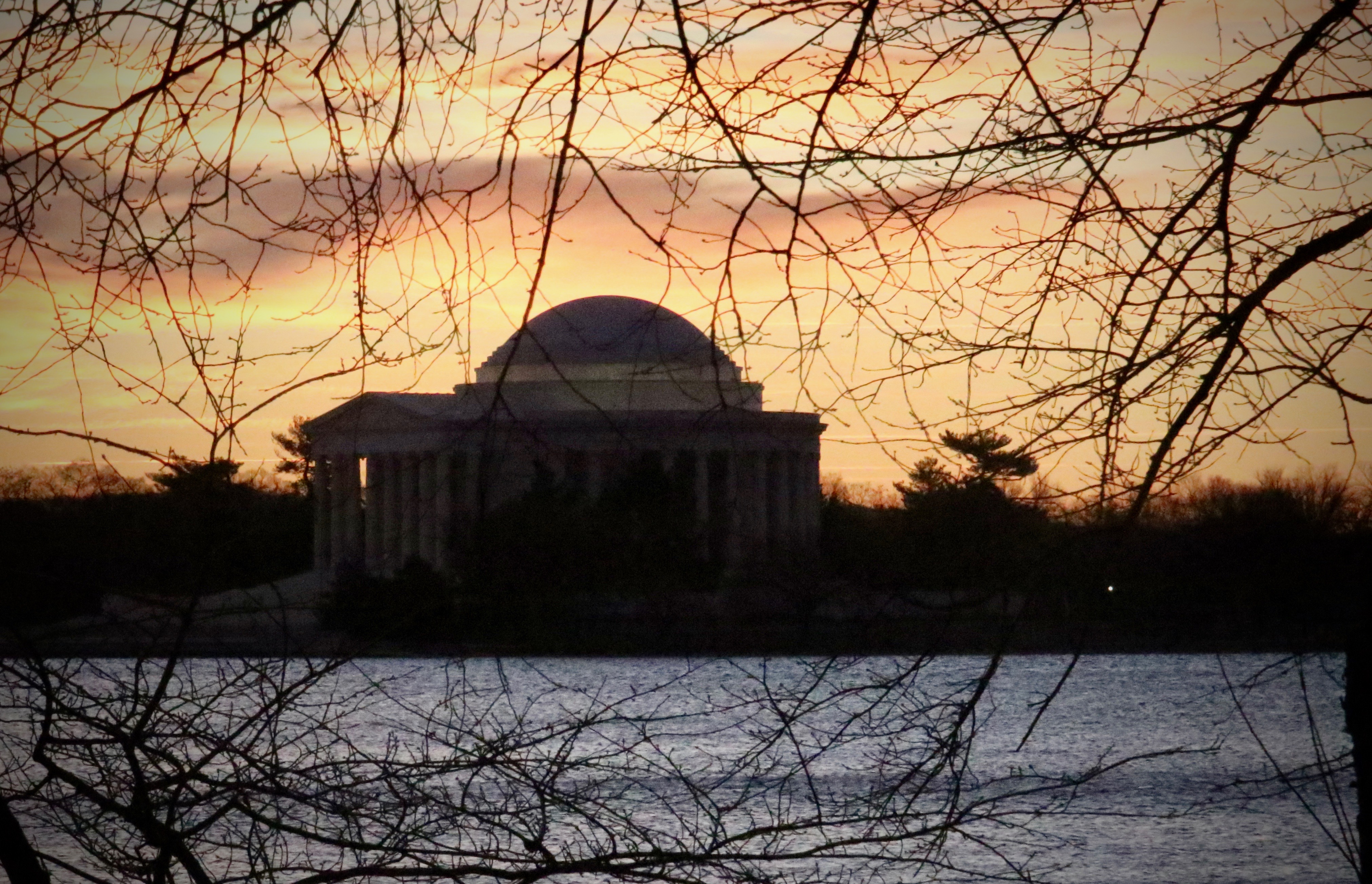
It was dark when I got up. The party still in my bloodstream, I collected my car from the valet and drove to the capitol building, lit from the night but framed in anticipation of the sun. Then to the Jefferson Memorial. The Washington monument from afar. Passing slowly by Martin Luther King, Jr and the Korean War Vets memorial. The Lincoln Memorial up close. This was where I found a few people. Not many, but more than anywhere else. By then the sun cleared the horizon, bathing everything in pink. I took photos, breathing deeply, the cold invigorating air clearing my head. I flâneured for a while and then got a message about breakfast in an hour.
Shower. Breakfast. Back to the room. And then another walk, this time along the mall with a college friend. Someone whose company, like many of my pals, just makes me happy. When I look in his eyes, I see him at twenty; I feel me at twenty. When we played. When we laughed over nothing at all. When it was that simple.
We were freezing, but I felt filled.
Back to the hotel to check out. One last stop before the road would stretch endlessly before me.
With a plan to go to the tomb of the unknown soldier, I drove to the Arlington National Cemetery, but I did not have it in me to walk twenty-five minutes in frigid temperatures on very little sleep with an impending five hour drive.
Always leave something you want to do when you return. My mother again.
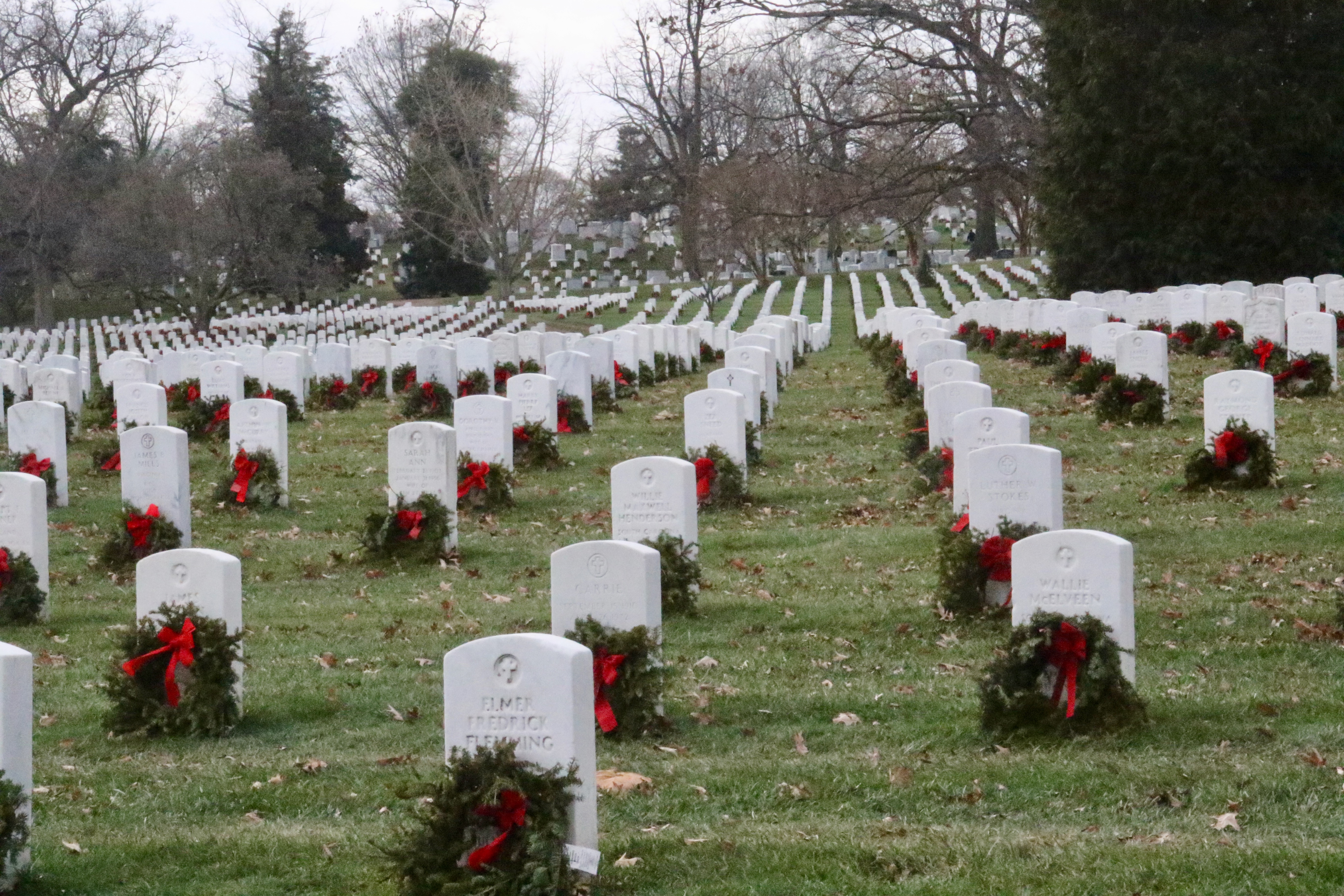
Another federal space, I got rejected for my pepper-spray for the second time, left it by the water fountain, and went for a walk among the graves for a few minutes. Each with a wreath leaning against it. The warriors and their wives/partners. Lives devoted to our country.
The perfect white tombstones go on as far as the eye can see, over rolling hills, up and down, beside trees and in open spaces. The symmetry belies the messiness of living, the meaning of their loss, but perhaps represents in some way the loyalty, the commitment, the regimen of devotion to our armed forces. I paused to think of this level of service to our nation. The ultimate sacrifice. I confess I do not think I would be capable of it. I thought for a moment of the holocaust: the lives lost for faith. How I unconsciously book-ended this trip.
As I walked back to my car, melancholy descended. I did not know if I would have the energy to do the whole drive, so I committed to a few hours at a time. I looked up motels at one pit-stop. En route, I talked with two friends, one in Europe, one in Utah. It turned out I did have the energy. I kept driving. The melancholy receded.
Arriving home, I got excited for the next day to write and review my photographs. I found I was still buzzing. I texted with some of the people whose company I shared the previous evening and planted seeds for future adventures.
Above all, I savored something else: by sharing and receiving feedback about my experience through my writing and in recent conversations, I discovered I am feeding my love for our country. In fact, the very minute I decided to go to DC, I felt my once-abandoned high school self radiate in joyful acknowledgment: yes! You are showing up for me, after all. You haven’t forgotten.
*
And then I think: maybe every wish gets heard.
Maybe the universe’s reply is:
Be patient. Even if you feel lost, you will find your way. Consider this — maybe we need to get lost to find our way.

*The evolution of Princeton’s informal motto which combines phrases attributed to President Woodrow Wilson, class of 1879, and Justice Sonya Sotomayor, class of 1976.
 Where I End & She Begins
Pingback: On Writing, Writers and the Written | Where I End & She Begins
Pingback: How, When, Where, and Why? | Where I End & She Begins